

DCT
ObserveIQ

Operational AI Platform

Alerts stopped being the start of an investigation.

  • Lower

    Mean Time to Resolution (MTTR) in incident response

  • Reduction

    in noise and alert volume reaching engineers

  • Root Cause on Arrival:

    Alerts carry probable causes and recommended actions

  • Unified Observability:

    Single-pane view across VMs, Kubernetes, cloud, and apps

  • Production-Ready:

    DCT ObserveIQ™ and DCT Flow™ running live across production operations

The data was there. The answer was not.

The data was there. The answer was not.

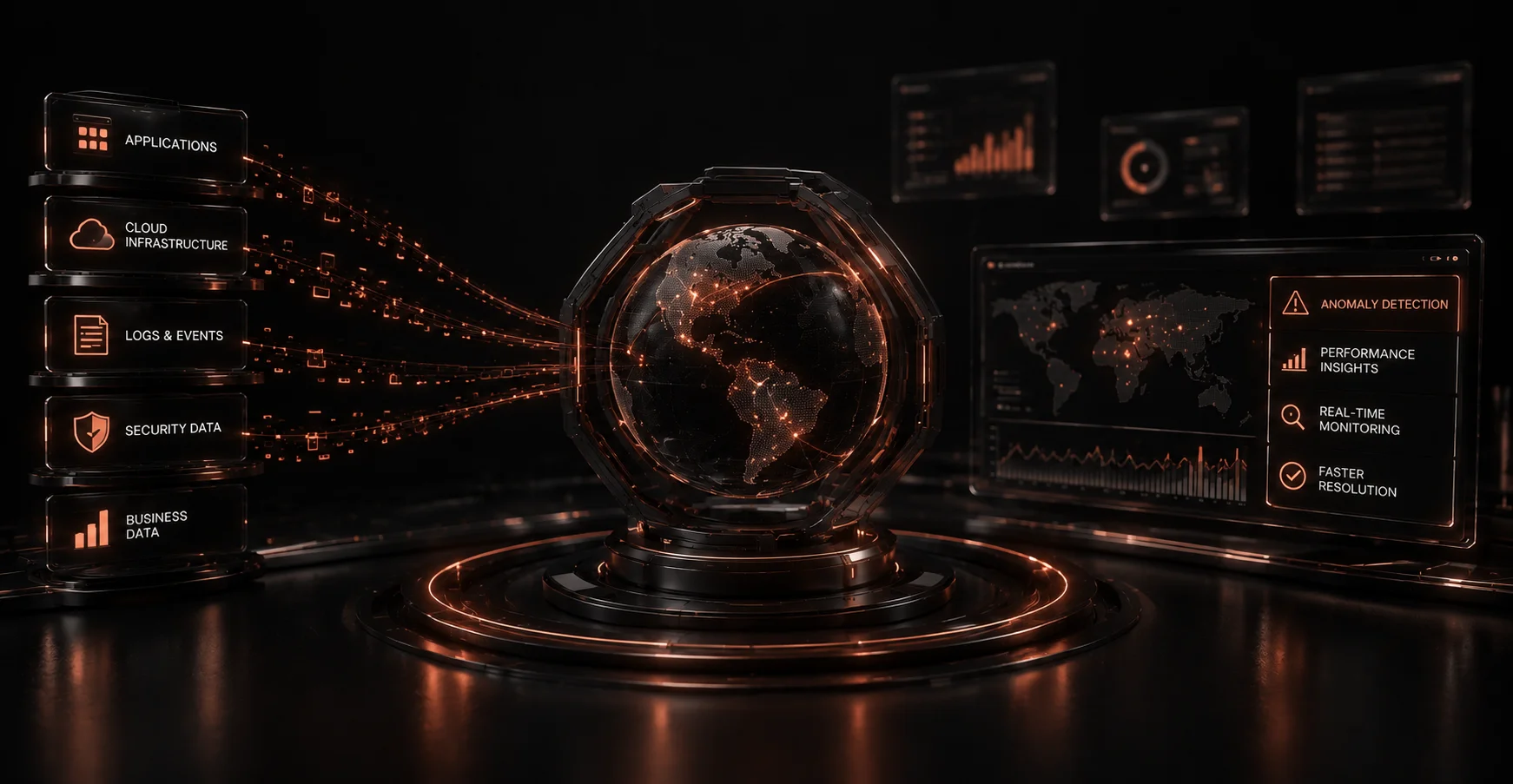
High signal volume across fragmented monitoring tools forced engineers to spend critical time manually investigating root causes. DCT deployed an operational AI platform—pairing DCT ObserveIQ™ and DCT Flow™—to automatically correlate telemetry, identify root causes upon detection, and trigger automated response workflows without manual handoffs.

Our Objective

Explain the incident, not just report it.

The engineering effort was happening after detection rather than as part of it. Three outcomes defined the build.

  • Shorten the time to cause so teams stop investigating each incident from scratch.
  • Cut alert volume so attention goes to the anomalies that carry operational weight.
  • Make oversight continuous so compliance visibility holds as the environment changes.

Challenges

Data volume outpaced the time to interpret it. Each of these was manageable alone. Together they set the pace of every incident.

  1. 1

    Fragmented Context: Operational data trapped across disconnected monitoring tools.

  2. 2

    Alert Fatigue: High alert volumes competing equally for engineering attention.

  3. 3

    Diagnostic Overhead: Incident response delayed by manual root-cause investigations.

Our Approach

Two products, deployed as one operating layer.

The operational intelligence tool solves the interpretation problem. Flow solves what happens next. The intelligence module produces the insight, and Flow applies intelligent process automation to the operational work that follows, the same business process AI pattern DCT deploys across enterprise functions.

01

DCT ObserveIQ™ | Operational Intelligence

Signals become explanations.

  • Anomaly detection. Infrastructure and application signals are analyzed continuously.
  • Root causes correlation. Related signals are linked so the probable cause arrives with the alert.
  • Prescriptive guidance. Teams receive the next action, not only the finding.
02

DCT Flow™ | Workflow Intelligence

Findings turn into action automatically.

  • Incident orchestration. Detected issues are routed to the right team with context attached.
  • Response automation. Recurring responses run through enterprise workflow automation.

DCT’s Execution

Detection came first. Automation followed it. Deployment began with the signals. Infrastructure, application, database, and cloud sources were connected and correlated before any response was automated. DCT applied its AI workflow automation services to the operational work that followed each finding. Every resolved pattern became a workflow for the next occurrence.

Cause arrives with the alert

Before

An alert reported that something had changed. The reason was a manual investigation.

After

Related signals are correlated on detection. The probable cause is attached to the alert.

Attention goes where it counts

Before

Every alert competed equally for engineering attention.

After

Anomalies are ranked by operational significance, so review starts with what matters.

One view across every layer

Before

Context for one incident sat across several separate monitoring tools.

After

VMs, Kubernetes, databases, cloud infrastructure, and applications report into one view.

Patterns surface before impact

Before

Emerging operational risks became visible once they had escalated.

After

Developing patterns are identified early and trigger a response workflow ahead of disruption.

Response runs without handoffs

Before

Routing an incident to the right team was a coordination step of its own.

After

Issues route automatically with context attached. Recurring responses follow a defined workflow.

Oversight is continuous

Before

Governance and compliance visibility was confirmed in periodic review.

After

Monitoring runs continuously, so oversight reflects the environment as it stands.

Results

Probable causes surface with the alert

  • Less manual investigation

    across recurring incidents

  • One operational view

    across the technology environment

  • Response workflows trigger automatically

    when defined conditions are met

  • 2 products, 1 operating layer:

    ObserveIQ and Flow

Production operations run with continuous monitoring and response

Let’s Build

Ready to Automate Your Operational Workflows?

Bring us your noisiest monitoring environment. We will show where detection, cause, and response can run as one loop.

Talk to an AI Expert